
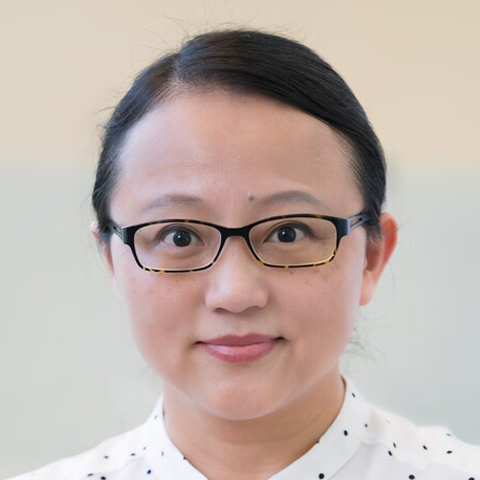
China
Dong Dong
Dong Dong is a public health scholar and bioethicist working at the intersection of health equity, community-engaged research, and the ethical governance of emerging health technologies. Based at the Chinese University of Hong Kong (CUHK), she brings a mixed-methods and relational approach to understanding health challenges faced by marginalised and underserved populations, grounded in the conviction that meaningful public health knowledge must be co-produced with communities and translated into policy and systems-level change.
Dong's research spans rare diseases, migrant and refugee health, reproductive and genomic ethics, and mental health. She founded the Rare Disease Real-world Data Lab at CUHK's Shenzhen Research Institute, where she leads one of the largest rare disease stakeholder datasets globally, covering over 20,000 patients across mainland China. In Hong Kong, she has built a community-based cohort of over 2,000 South Asian residents, co-designing culturally tailored interventions with migrant women and extending this work to refugees and asylum seekers. Internationally, she leads the Qualitative Workgroup of the World Mental Health International College Student Initiative, coordinating researchers across 12 countries. She has published over 114 peer-reviewed articles and secured more than HK$149 million in competitive funding.
Dong holds a PhD, MBE, MPhil, and BA, and her interdisciplinary training across communication, epidemiology, and bioethics continues to shape her integrated approach to equity-centered scholarship. She serves on the Ethics Advisory Board of the Hong Kong Genome Institute and collaborates with UNHCR, the Red Cross, and Save the Children.
Related Fellows

Nguyen Thi Hoang Anh
Viet Nam

Vu Hoang Duong
Viet Nam
Nguyen Quynh Anh
Viet Nam

Vu Hai Truong
Viet Nam