Community Voices in Equity Spaces
Community Voices in Equity Spaces
What it means to be seen, heard, and recognized
By Ana P. Santos (2018, Philippines)
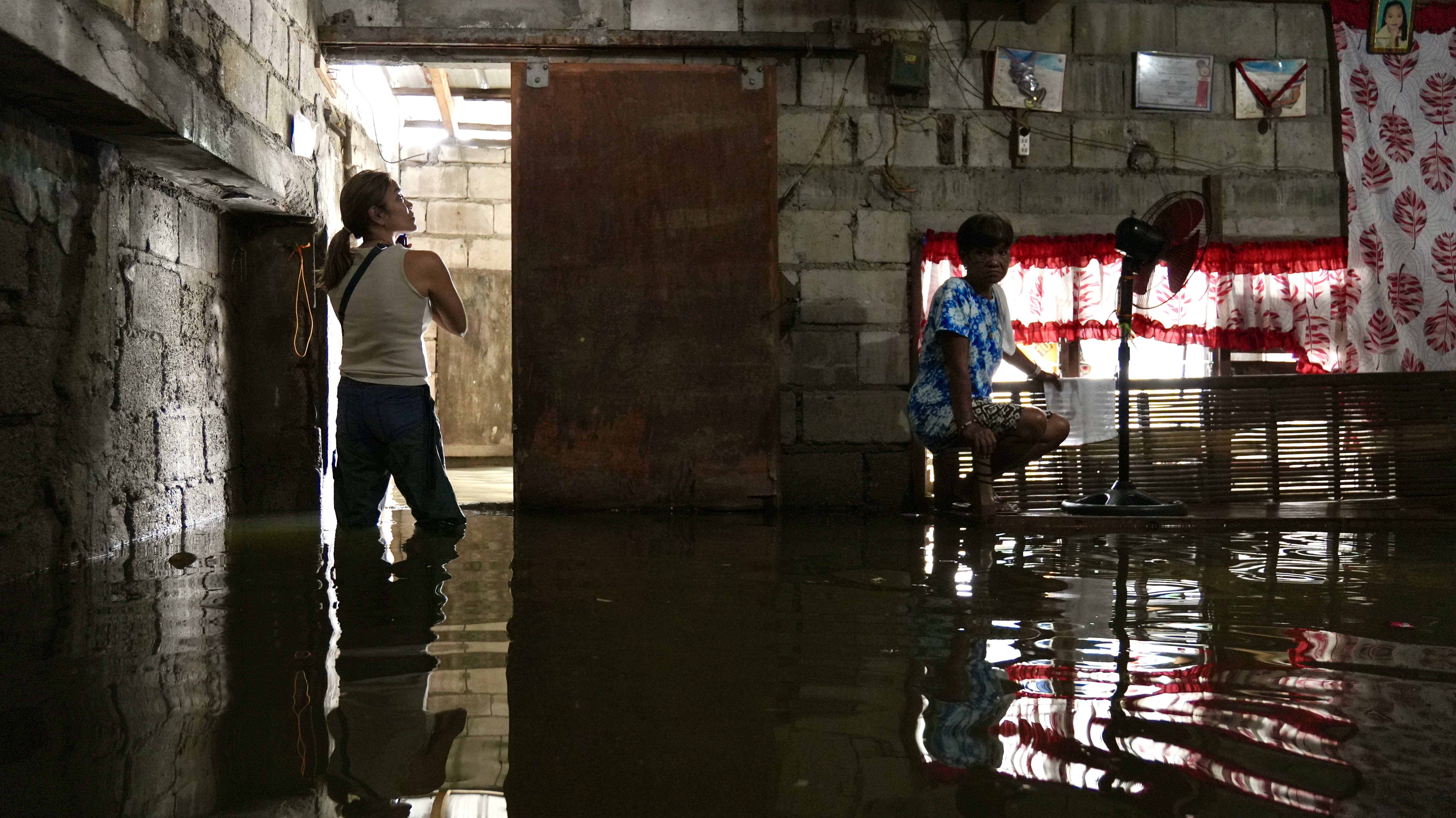
At the CMB Foundation/Equity Initiative Annual Forum in January, Fellows engaged, discussed, and debated policy systems, equitable governance, and social justice. But for Angie Atienza and Riri Sacdalan, residents of Isla Tibaguin in Bulacan, Philippines, the Annual Forum meant something more personal.
It was a rare moment where their everyday lives—lived in and around water—were told in their own voices, not just shown or described by others.
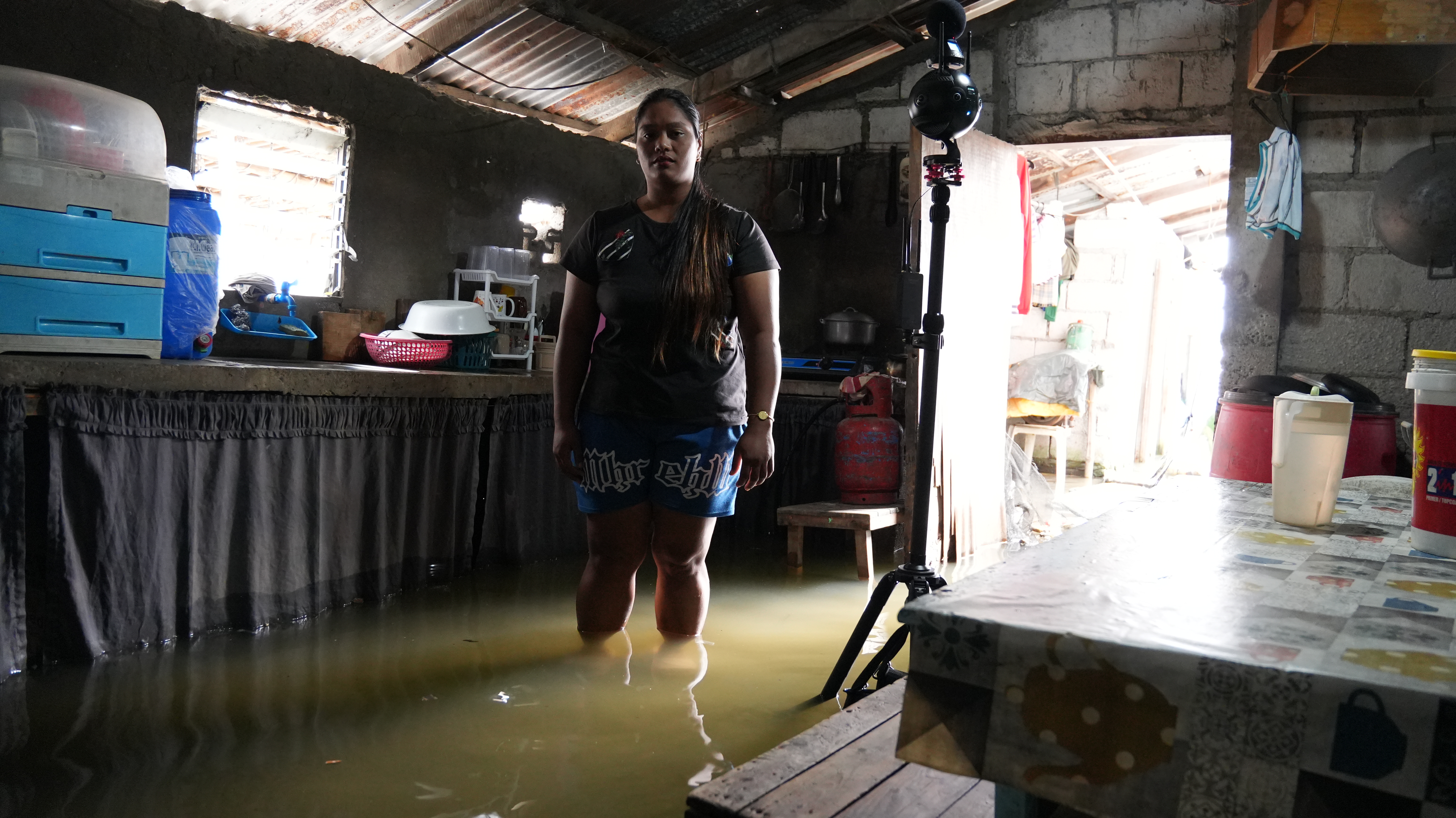
Angie, a Mother Leader figure in Isla Tibaguin, standing in the flood that has enterred her home
Through the 360/VR film premiere of Living in Water at the Annual Forum, Fellows were immersed in a community where flooding is a near daily occurrence. Beyond the screen of VR headsets, Angie and Riri were present to speak in their own voices about what that reality means.
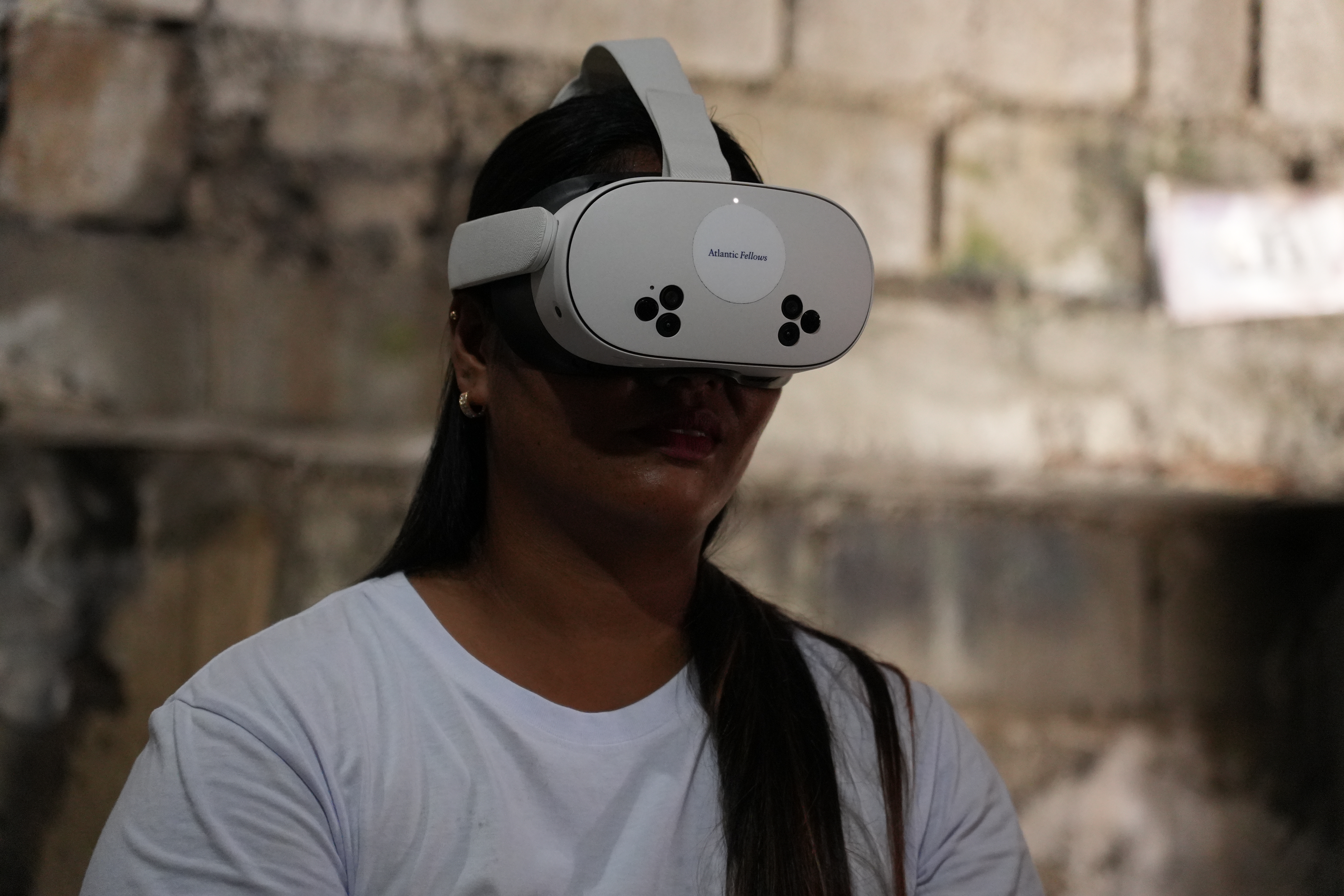
Angie watching the film 'Living in Water' by Ana through the Attlantic Institute's XR technology
Their stories revealed a life of waiting– sometimes 4 to 5 hours for floodwater to subside. The routines of daily life such as cooking, eating, and walking are done while submerged in water. Mundane conveniences like sitting down to eat, a night of uninterrupted sleep, and dry feet, are taken away. Nearly every day.
According to Angie, who serves as a Mother Leader, a formal community role that connects residents to local government and advocates for those most vulnerable, the effects fall hardest on women and children. Many women have to wade through the waist-deep waters while on their period or pregnant. Meanwhile, children face their own risks. Constant exposure to floodwater can lead to illness, and when the water rises too high, they are unable to attend school.
Constant flooding also changes patterns of fishing, making work for fishers more difficult. “With the near daily flooding, it slows everything down, even our livelihood,” said Riri, a fisherman. 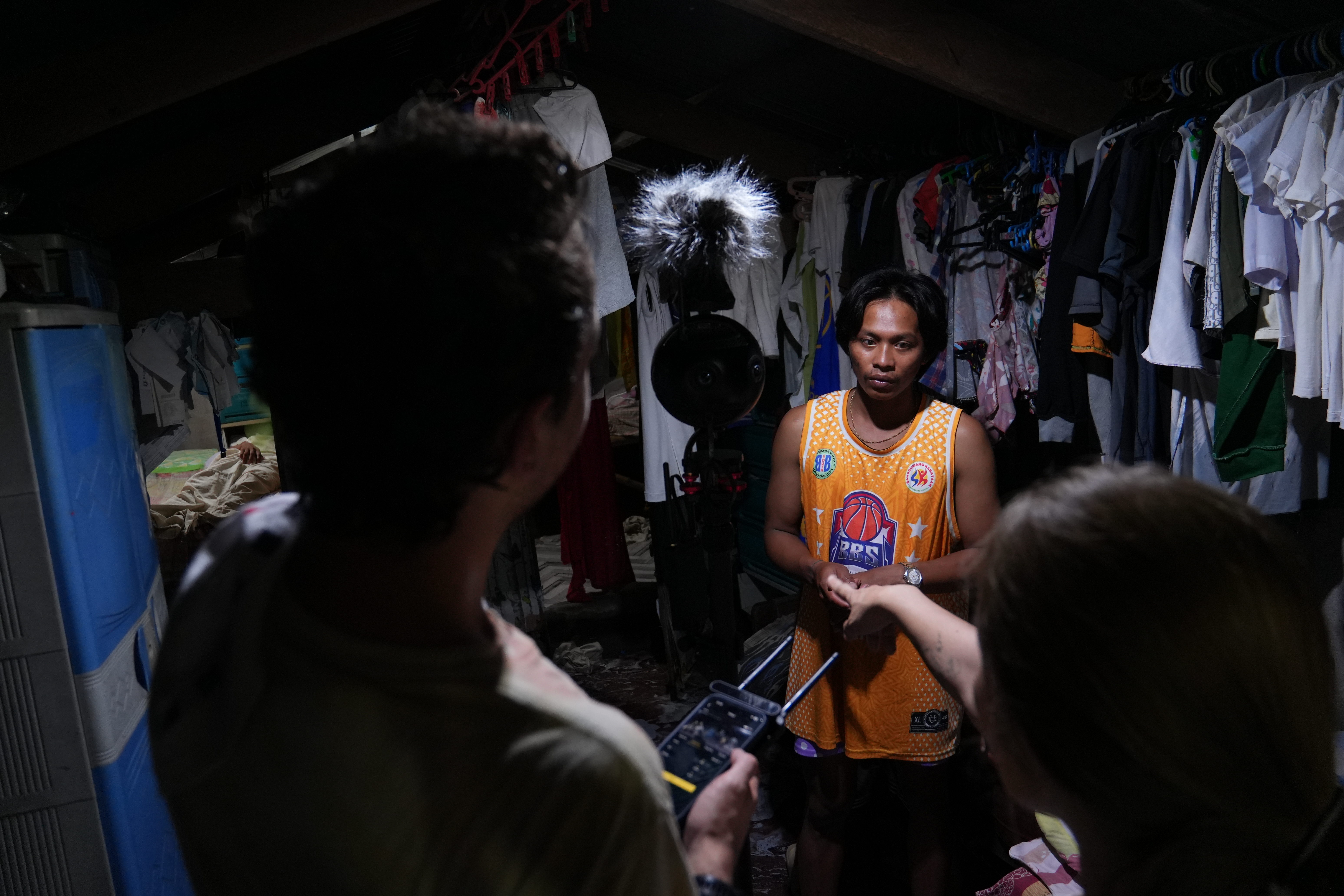
Riri, a fisherman from Isla Tibaguin, standing in floodwater in his home as he is being interviewed
Their presence at the Annual Forum mattered. Many Fellows and attendees recognized Angie and Riri from the film and were eager to speak with them and learn more about their everyday lives.
“It was an incredibly nice feeling,” Angie said, describing how participants were genuinely interested in understanding their daily lives. “They saw how we struggle and move forward despite the everyday challenges,” added Riri.
Three of the top 10 countries most vulnerable to disasters are in Southeast Asia: Philippines (1), Indonesia (3), and Myanmar (6). Communities in these countries such as Isla Tibaguin are visible only in moments of emergency and captured in news images of disaster, or reduced to data points in policy documents. Individual experiences are framed by others.
Angie and Riri’s presence at the Annual Forum challenged that.
Despite the immersive experience of Living in Water, Angie and Riri said that it could not communicate the unseen oppressiveness of the heat.
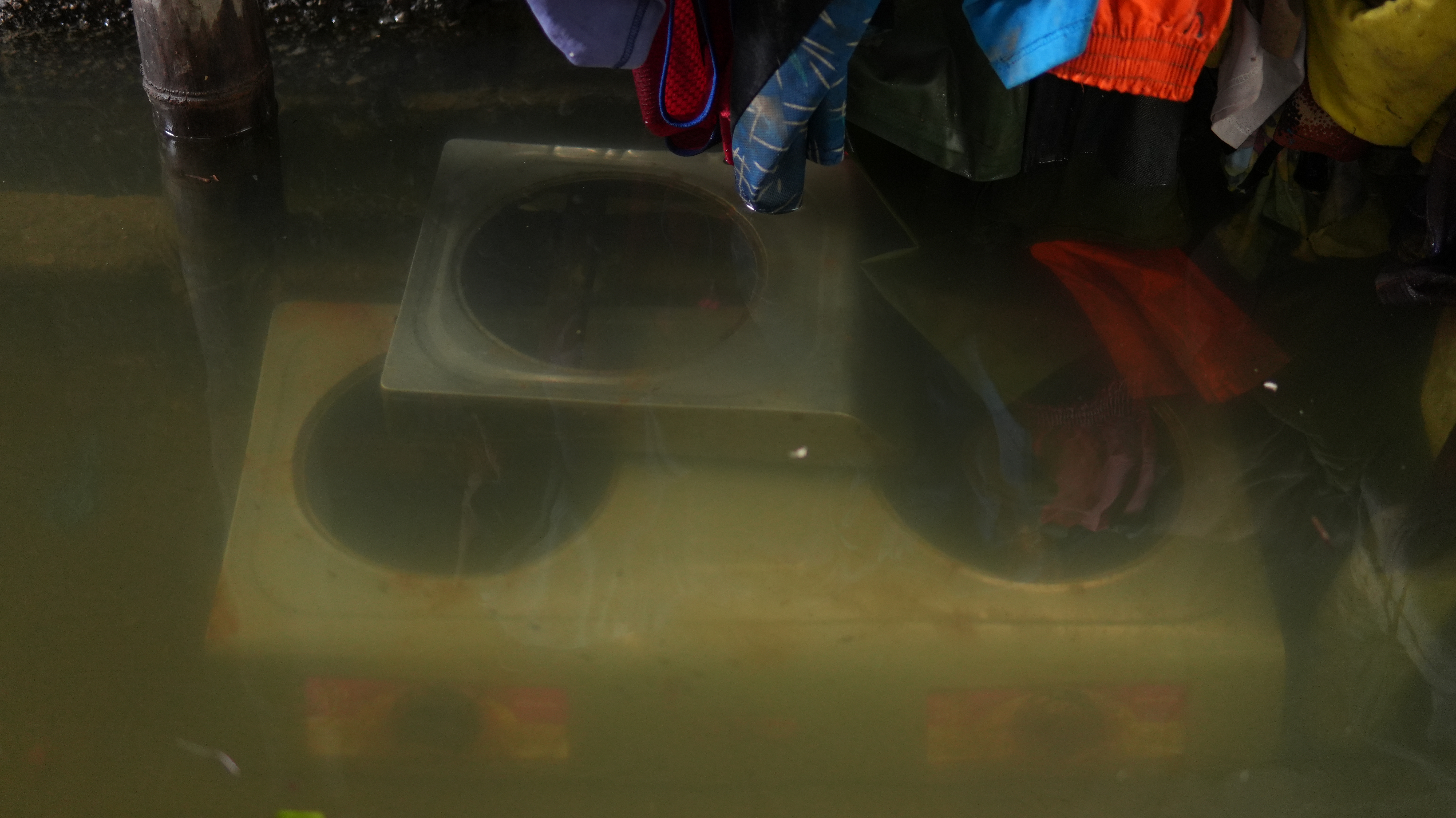
A stove submerged by the floodwater
“Everything becomes harder when it is hot,” said Angie, who shared that this is when incidents of high blood pressure become more common. “When the boat (to go to the mainland) is not fast enough, some don’t reach the hospital in time.” The heat has intensified, she said, as water evaporates and mixes with the air, creating a heavier, more oppressive environment.
Despite this, the community continues to rely on bayanihan, the Filipino spirit of collective care and cooperation. “The community comes together and is always ready to help each other out,” Angie explained.
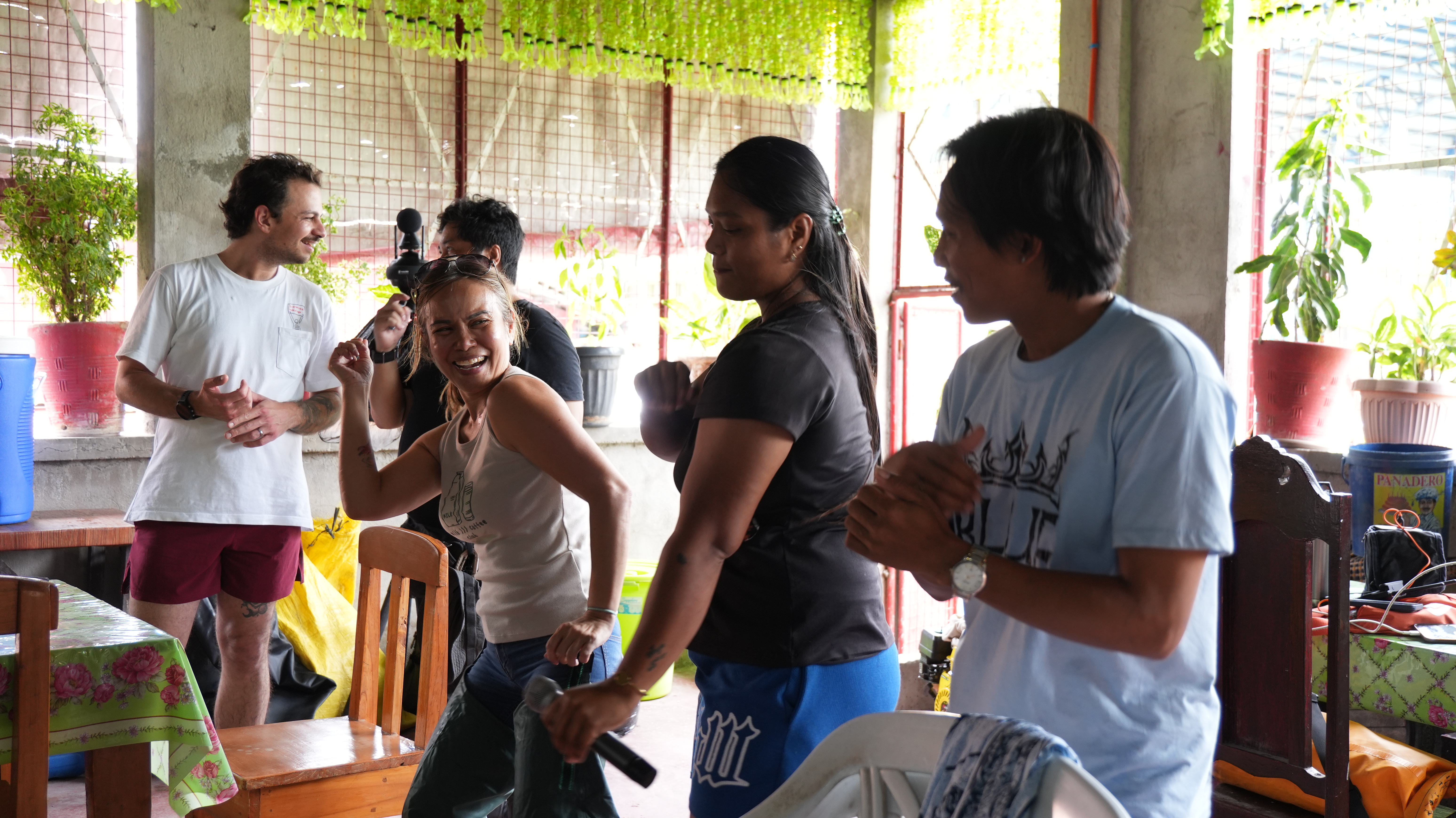
Ana dancing with Angie and Riri, a rite of worship and celebration that is part of Tibaguin residents way of life
But she is also clear about its limits. Solidarity helps them cope, but it cannot replace the infrastructure and services they need. Their community needs better flood protection such as dikes, and access to emergency services like ambulances.
Creating equity
Angie and Riri’s presence raises important questions to the CMB/EI Community:
- What does it truly mean to include community voices?
- What do we gain from centering community members in finding solutions?
- What do we learn and gain when we look to lived experience as a form of expertise?
It is not only about visibility. It is about listening, engaging, and allowing those voices to shape how problems are understood and addressed.
Because when the climate crisis is experienced not as a single event, but as a daily condition, it challenges the policy systems that are designed for one-off disaster events, with responses that measure what is quantifiable.
To move toward equity, those who live these realities like Angie and Riri must not only be present in the conversation, they must help define it.
This story is part of the Equity Initiative’s 10-year anniversary, celebrating a decade of leadership, collaboration, and impact across Southeast Asia and China.