Fellows' Reflections from the Atlantic Institute Emerging Technologies Residency
The Atlantic Institute Emerging Technology Residency brings together Atlantic Fellows committed to climate justice to build hands-on skills in immersive and technology-driven storytelling. The residency equips Fellows to engage critically with the technologies increasingly shaping conversations on equity, governance, and justice.
Exploring Climate Justice Through XR
CMB/EI Fellows Angga Dwi Martha (2021, Indonesia), Christian James Nazareth (2023, Philippines), and Kaneka Keo (2023, Cambodia) were among ten Atlantic Fellows selected for the Atlantic Institute's Emerging Technologies Residency: Climate Justice, a week-long program in Oxford exploring extended reality (XR) — the same immersive technology behind Ana P. Santos' (2018, Philippines) film Living in Water. Below, Angga, James, and Kaneka reflect on their experiences and their takeaways from the week-long residency.
Angga Dwi Martha's Reflection (2021, Indonesia)
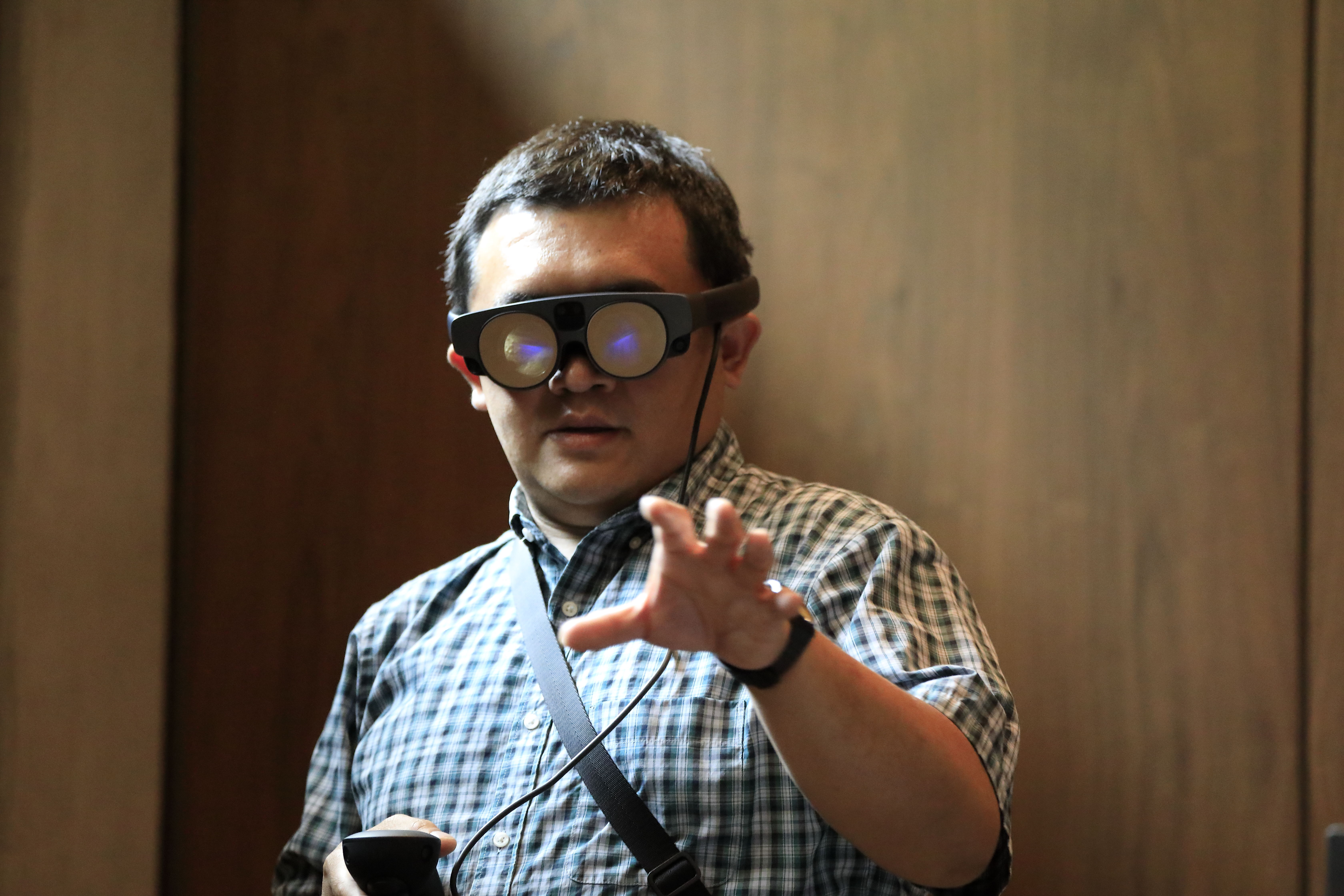
What if scale is not always the point?
I spent the week in Oxford for the 2026 Atlantic Fellows Emerging Technologies Residency, exploring virtual reality, phone-based augmented reality, immersive art installations, data and the future of spatial computing, among other things.
I arrived expecting to learn about emerging technologies. And I did. I put on headsets, experimented with unfamiliar tools, and stepped into virtual spaces.
Later, I realised that the residency was not about mastering technology. It was about learning how to think differently about it, and more importantly, about asking better questions
When scale is not the only measure
Working in international development, I am accustomed to thinking about scale. How many people can we reach? Can an intervention move from a pilot to a programme, from one community to several countries, from thousands of people to millions?
There are good reasons for thinking this way. When the challenges we work on affect millions of people, scale matters enormously. But the residency challenged me to think about whether we sometimes confuse scale with impact. It was my experience with extended reality, or XR, that made this question particularly tangible.
Standing inside an immersive experience feels fundamentally different from reading about something on a page or seeing it presented on a screen. Space, sound, movement and perspective become part of the experience. At some point, I stopped thinking about XR simply as technology and started thinking about it as art.
We do not judge a painting by how many people have seen it. We value it because it has the power to move someone, shift a perspective or make an experience impossible to ignore.
Perhaps we should sometimes think about technology in the same way.
An immersive experience that changes how even a handful of policymakers understand inequality may ultimately matter more than an application downloaded by millions and forgotten the next day.
This does not mean scale is unimportant. It means that reach and impact are not necessarily the same thing. Some of the changes that matter most are difficult to count: a perspective reconsidered, an assumption challenged, a conversation started, a decision made differently.
Data informs us. Stories move us.
The experience with XR also made me think more deeply about something that sits at the centre of much of my professional life: how we communicate complex realities to people who make decisions about them. We rely heavily on data, and rightly so.
Data allows us to understand the scale of a problem, identify inequalities, recognise patterns and make better decisions. It can tell us how many children are out of school, how many families have been displaced or how many people lack access to essential services.
But there is a difference between knowing something and feeling its significance. No technology can reproduce another person's lived experience, and putting on a headset does not mean we suddenly understand what it means to live someone else's reality. It can make something distant feel a little closer.
Starting with the human, not the technology
Of all the ideas I am taking home, the most important may also be the simplest: technology should adapt to the work we are trying to do, not the other way around.
We have Artificial Intelligence. Where can we use it?
We have virtual reality. What can we build with it?
We have a new platform. How can we integrate it?
But Oxford reminded me that perhaps we should reverse the order. Start with the human.
What are we trying to change? Who are we trying to reach? What do we want someone to understand, experience or do differently? Whose perspective is missing? Who benefits, and who might be left behind? Only then should we ask whether technology has a role to play.
The Atlantic Institute sits at the heart of a global community of Atlantic Fellows working across different disciplines, geographies and forms of inequity. There are many places where one can learn about emerging technology. There are fewer places where one can learn about technology explicitly through an equity lens. That distinction mattered to me.
Throughout the residency, we were encouraged to think about who they serve, whose realities and knowledge are represented in them, who has access to them, and which existing inequalities they might challenge or inadvertently reproduce.
In other words, equity was not something added at the end of a conversation, it was part of the lens through which we encountered the technology in the first place.
My own fellowship journey through the Equity Initiative has taught me to look beyond the immediate or technical dimensions of a problem and ask what structures, systems and distributions of power sit underneath. Bringing that same lens to emerging technologies changed the conversation.
The question becomes not simply, “Is this innovative?” It becomes: “Innovative for whom?”
Not simply, “Does it work?” But: “Who does it work for, and who might it leave out?”
And not only, “Can we build it?” But: “What human purpose are we asking it to serve?”
This is ultimately what designing technology around humanity means to me.
Technology is not developed or deployed in a vacuum. Decisions are made about which problems deserve attention, what data is collected, what gets optimised, whose knowledge counts and whose experiences become visible or invisible. The most sophisticated technology is therefore not necessarily the most useful one. Sometimes a simple tool may be enough. Sometimes technology needs to be redesigned around the people it is intended to serve. And sometimes the right answer may be not to use technology at all.
Christian James Nazareth's Reflection (2023, Philippines)
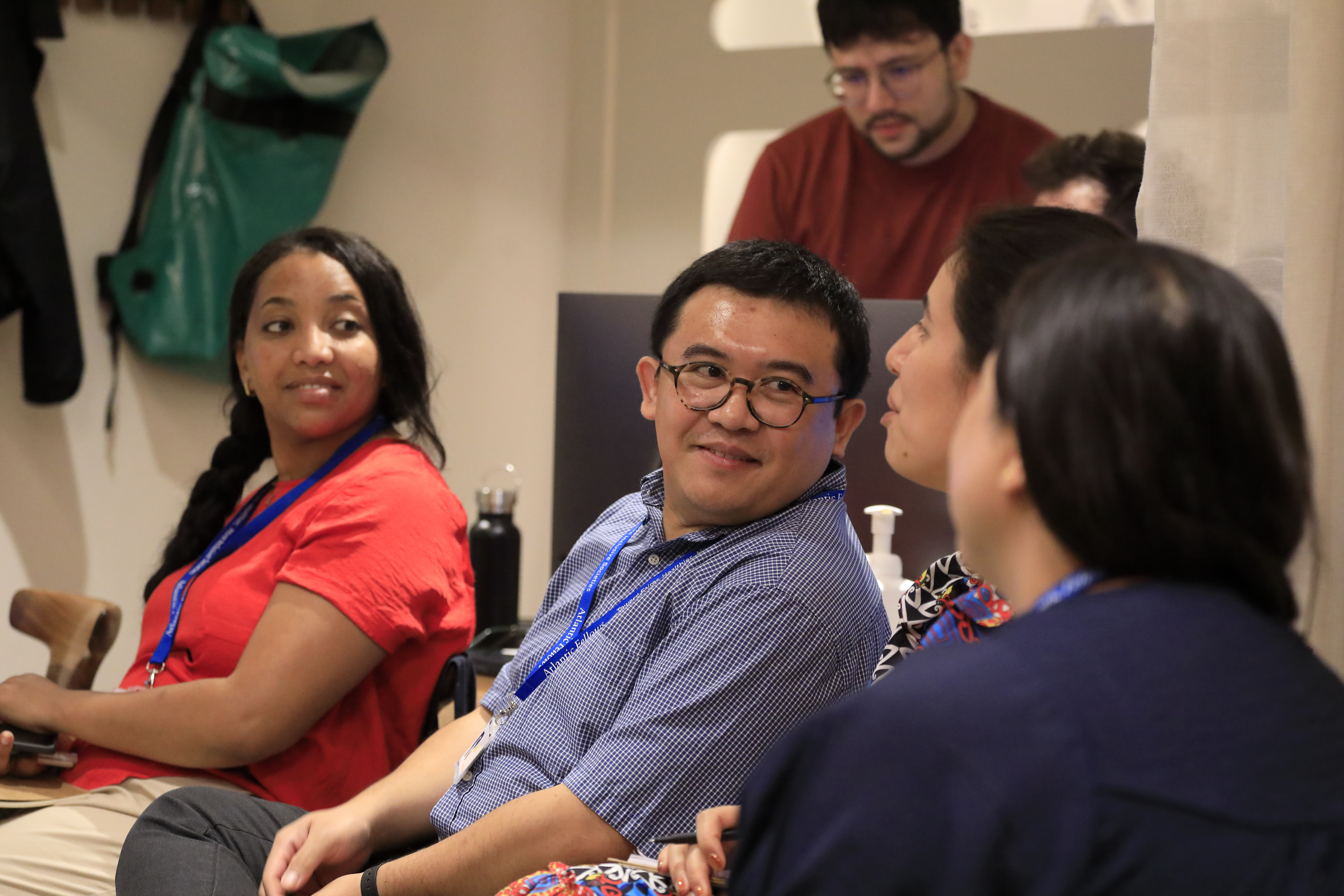
Key takeaways and insights from the residency
Before the residency, I tended to think that creating something meaningful with XR would require significant technical knowledge, institutional support, grants, and resources. Through the residency, I began to see that these technologies can be approached in a much simpler and humbler way: through curiosity, experimentation, play, and learning by doing.
This made the technology feel much more accessible to me. Rather than beginning with the question of what sophisticated product or project we can create, we can begin with a story, an experience, or a question that matters to us, and then explore how the technology might help us engage with it differently. For me, this was quite liberating, especially as someone who does not come from a technology background.
The hands-on experience of creating our own XR film as a group was particularly valuable. We had to collectively develop an idea and storyline and then figure out how to translate it using the technology. It allowed us to move from simply talking about XR to actually experimenting with it. I realised that much of the learning happens through the process itself: trying things, making mistakes, playing with the tools, and creating something together.
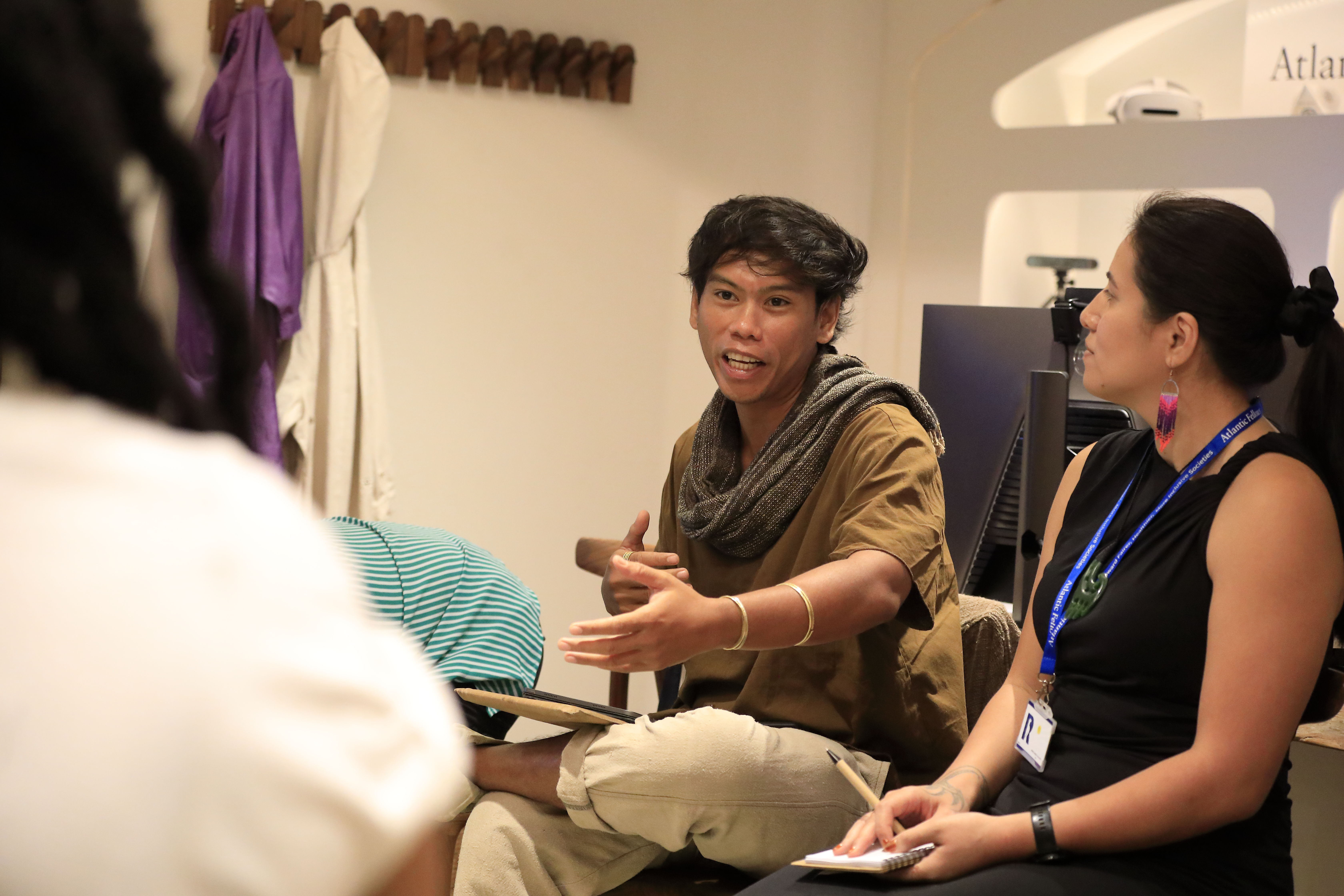
Another important takeaway was how much the intimacy and diversity of the group shaped the learning. We came from very different contexts and areas of work, but because the group was small, there was space to really listen to and learn from one another. The richness of our different perspectives became amplified by the intimacy of the residency. In many ways, I learned about the possibilities and questions surrounding these technologies not only from the facilitators, but also through how other fellows understood them through their own worlds and experiences.
I was also struck by the commitment of Alice and Richard in creating an environment where we could collectively learn and unlearn. The residency was not simply about teaching us how to use emerging technologies, but creating a space where we could question our assumptions about them and connect these technologies to the realities of our communities and work.
Ultimately, one of my strongest insights is that the technology itself does not necessarily have to be the starting point. The starting point can be our communities, stories, relationships, questions, and lived realities. Emerging technologies can then become another creative tool through which we explore, communicate, and perhaps see those realities differently.
Ideas or approaches that could be relevant to our community
It seems that the Atlantic Institute is placing significant focus and resources into emerging technologies, and I think this is something our community could leverage more intentionally.
One possibility would be to explore creating a small emerging technologies lab or creative space tailored to our program or region, perhaps organized around particular themes that are relevant to our work. This could give fellows more direct and sustained access to some of the knowledge, tools, and resources that already exist within the Atlantic Institute, while allowing us to explore these technologies through the realities and needs of our own communities.
I also think there is an opportunity to incorporate emerging technologies more intentionally into the fellowship induction year. Introducing new fellows early on to these technologies, and more importantly to different ways of thinking critically and creatively about them, could help fellows become more comfortable with the resources available across the Atlantic community. It could also allow ideas and collaborations to develop throughout the fellowship rather than emerging only through specific residencies or events.
Kaneka Keo's Reflection (2023, Cambodia)
Building XR Literacy and Confidence
The residency successfully demystified immersive technologies and encouraged participants to engage as creators rather than consumers of technology. Fellows gained exposure to:
-
360° filmmaking and spatial storytelling ,
-
Virtual Reality (VR) and Augmented Reality (AR)
-
Reality capture and immersive experiences,
-
Practical applications of XR for social impact and Ethical considerations in immersive design
Many participants entered the residency unfamiliar with XR and left with increased confidence, curiosity, and ideas for integrating immersive technologies into their own work.
"I am a painter and theatre practitioner, and suddenly this felt like a whole new medium opening up. It made me think differently about space, storytelling, and what is possible” expression from one of our fellows.
Interdisciplinary Innovation
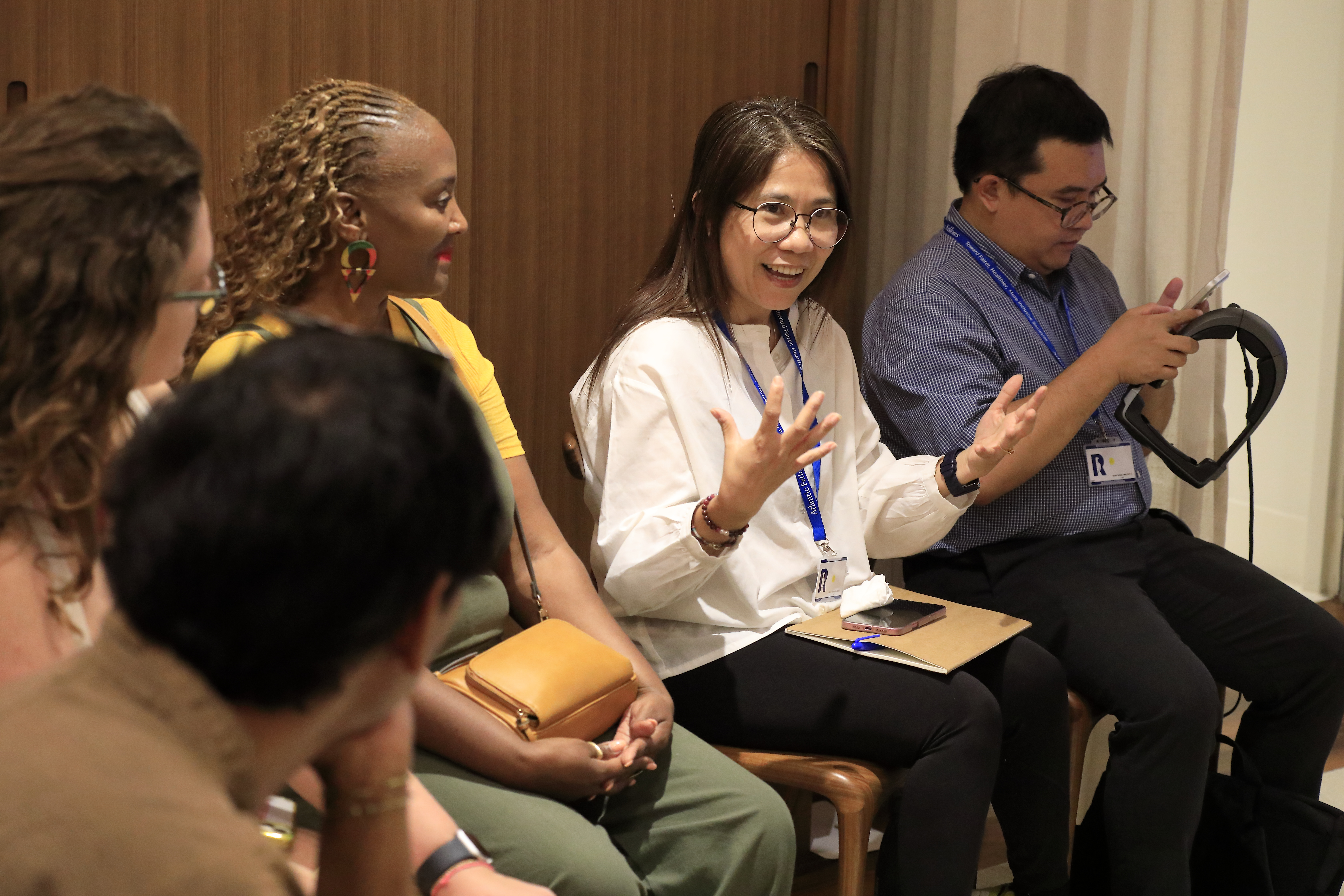
A defining strength of the XR Residency was its intentionally interdisciplinary approach, which brought together fellows and practitioners from diverse fields including climate justice, health equity, arts and culture, policy advocacy, communications, community development, journalism, activism, filmmaking, theatre, and research. Rather than positioning XR as a specialist technology reserved for technologists, the residency demonstrated how immersive tools can become a shared space where different disciplines intersect, collaborate, and generate new ways of thinking and working.
Throughout the residency, we were encouraged to bring our existing expertise, lived experiences, and professional practices into conversations about XR. Speakers from Electric South emphasized that some of the most innovative immersive projects emerge when artists, activists, architects, storytellers, community practitioners, and researchers work together to explore how technology can serve social, cultural, and environmental goals. The residency reinforced the idea that XR is not simply a technical medium but a creative and collaborative tool that benefits from multiple perspectives.
This interdisciplinary exchange was evident in discussions among fellows. We explored how XR could support climate adaptation planning through community hazard mapping, flood and wildfire visualization, and ecosystem storytelling. Others reflected on applications for public health, mental health, restorative justice, indigenous knowledge systems, cultural preservation, community engagement, and policy advocacy. These conversations illustrated how immersive technologies can bridge technical innovation with real-world challenges, making complex issues more tangible, understandable, and emotionally engaging.
Importantly, the residency created an environment where experimentation was encouraged and expertise was shared horizontally. Peer-to-peer learning became a core feature of the experience, with participants drawing inspiration from each other's work, communities, and cultural contexts.
Changing How We Think
Participants repeatedly reflected that the residency changed how they think about:
-
Space and place
-
Audiences and participation
-
Storytelling and experience design
-
Community engagement
-
The role of technology in social change
The learning extended beyond technical skills and encouraged new ways of imagining and designing interventions.
“Yesterday completely changed how I think about the work we are doing. We support communities to map hazards and vulnerabilities for climate adaptation, but now I can imagine using immersive technologies to visualize flooding, wildfire spread, and ecosystem impacts in ways that people can truly experience and understand.” Expression by our fellow participants
Key Themes Emerging from the Residency
A. Technology as a Tool, Not the Goal
A recurring message throughout the residency was that technology should serve a purpose rather than drive work. Facilitators and guest speakers consistently emphasized that XR is most powerful when it is used to deepen existing practices, address real-world challenges, and amplify community voices, rather than being adopted simply because it is new or innovative. Participants were encouraged to start with the stories, issues, or communities they care about and then explore how immersive technologies might enhance understanding, engagement, or impact. This approach resonated strongly with fellows, many of whom came from non-technical backgrounds and initially felt uncertain about where XR might fit within their work.
Through discussions and practical demonstrations, participants began shifting their thinking from "What technology can I use?" to "What problem am I trying to solve?" Fellows explored how XR could support climate resilience through hazard mapping and future scenario visualization, strengthen public health communication, preserve cultural knowledge, and make complex social issues more accessible and emotionally engaging. Rather than reshaping their work around the technology, participants reflected on how immersive tools could be adapted to their existing goals and community needs. As one fellow noted, the residency helped them realize that the value of XR lies not in the technology itself, but in its ability to open new pathways for storytelling, learning, participation, and social change.
B. Hope, Imagination and Social Change
A particularly powerful insight emerged through Della's project presentation “Hope Gap XR” project, which explored the space between what people believe is possible and the actions they are willing or able to take to create change. The project challenged participants to think beyond traditional approaches that rely solely on data, evidence, or policy advocacy. While these remain critical, the discussions highlighted that sustainable social transformation also requires hope, imagination, and the ability to envision alternative futures. Through immersive XR experiences, participants were able to step into possible futures and engage with scenarios that made abstract concepts tangible. Rather than simply reading reports or hearing presentations, they could experience what a more equitable, climate-resilient, and inclusive future might look and feel like. This created an emotional connection that helped bridge the gap between understanding a problem and believing that change is achievable.
The relevance of this approach resonated strongly among participants working across diverse sectors, including climate adaptation, health equity, Indigenous rights, and community resilience. Many reflected that traditional storytelling often focuses on documenting challenges, losses, and injustices, which can sometimes leave audiences feeling overwhelmed or powerless. The Hope Gap XR framework offered an alternative by demonstrating how storytelling can become a tool for possibility, helping people imagine pathways toward positive change.
"What stayed with me was the idea that storytelling is not only about documenting problems, but also about showing pathways forward. The concept of the Hope Gap helped me think about how we move people from belief to action." Expression from one of the fellows
C. Community, Relationships and Co-Creation
One of the strongest and most enduring lessons from the residency was the power of relationships. While participants came to learn new tools, methodologies, and approaches to immersive storytelling, many reflected that some of the most meaningful learning happened through conversations with one another. Residency created a space where people from different countries, disciplines, and lived experiences could connect as peers rather than as experts and learners. Participants shared challenges, aspirations, and personal journeys, discovering common values and struggles despite working in diverse fields. These exchanges fostered a sense of trust and belonging that encouraged openness, vulnerability, and mutual support. As ideas were exchanged over workshops, meals, and informal conversations, participants found themselves learning not only from technical expertise but also from the wisdom, experiences, and perspectives of fellow changemakers. This reinforced the understanding that transformational leadership and innovation are often rooted in relationships and collective learning rather than individual achievement.
The residency also highlighted the importance of building communities of practice that extend beyond a single event or project. Rather than working in isolation, participants were encouraged to co-create, experiment, and develop ideas collaboratively. This process nurtured deeper bonds and a sense of shared ownership, allowing projects to evolve through collective imagination and diverse perspectives. Many participants spoke about the value of finding people who understood their work, challenges, and ambitions, creating connections that felt both professionally enriching and personally meaningful. What emerged was more than a network; it became a community grounded in trust, solidarity, and a shared commitment to social change. Long after the residency ended, participants expressed a desire to continue supporting one another, exchanging knowledge, collaborating across borders, and amplifying each other's work. The experience demonstrated that the true impact of residency lies not only in the projects produced, but in the relationships formed, the friendships nurtured, and the continuing ripple effects generated through a growing network of connected leaders and practitioners.
D. Decolonizing Technology
Participants reflected on the importance of decolonizing technology by ensuring that XR and other digital innovations are shaped by the communities they aim to serve rather than by externally imposed perspectives. Discussions highlighted concerns that many technologies are designed primarily through Western worldviews, which can unintentionally reinforce existing power imbalances and forms of digital colonization. Participants emphasized that communities, particularly Indigenous peoples and marginalized groups, should be active creators and decision-makers in the design process, with local knowledge, cultural traditions, lived experiences, and Indigenous worldviews guiding technological development. There was strong agreement that XR should be used as a tool to amplify community voices, protect cultural identity, and strengthen local agency, ensuring that technology contributes to equity and self-determination rather than replicating historical patterns of extraction, exclusion, and control.
"How do we become creators rather than consumers of technology? How do we decolonize technology and ensure that our communities shape how it is used rather than simply adapting to systems designed elsewhere?" inspiring message from one of fellow
Applications to Participants' Work
The residency successfully combined conceptual discussions around justice, hope, decolonization, and ethics with practical exposure to XR tools and methods.
The residency sparked a wide range of practical applications for XR across climate resilience, health equity, and cultural preservation. Participants saw significant potential for using immersive technologies to support community hazard mapping, visualize flood and wildfire risks, strengthen climate adaptation planning, and enhance disaster preparedness by helping communities better understand future scenarios and environmental changes. In the health sector, XR was recognized as a valuable tool for public health education, mental health and trauma-informed engagement, community health worker training, and fostering empathy among diverse stakeholders by making complex health systems more accessible and relatable. Participants also identified opportunities to use XR to document local histories, preserve cultural traditions, create immersive cultural experiences, and strengthen intergenerational knowledge sharing. Across all these areas, XR was viewed not simply as a technological innovation but as a powerful storytelling and engagement tool that can make complex issues more tangible, deepen understanding, and inspire collective action toward more resilient, equitable, and culturally connected communities.
Ethical Considerations
The residency underscored that while XR offers powerful opportunities for engagement and storytelling, it also carries significant ethical responsibilities. Participants emphasized the importance of trauma-informed design, recognizing that immersive experiences can evoke strong emotional and physical responses that are often more intense than traditional forms of media. As a result, careful participant onboarding and offboarding, informed consent, trigger warnings, and dedicated spaces for reflection are essential to ensure wellbeing and avoid traumatization. Discussions also highlighted the need to make XR more accessible and inclusive by addressing barriers such as high costs, limited access to equipment, varying levels of digital literacy, and physical challenges such as motion sickness. Participants explored practical approaches including community-based exhibitions, shared devices, public libraries, and low-cost mobile platforms to ensure that immersive technologies can be used responsibly and equitably, enabling broader participation while maximizing their social impact.
Conclusion
The XR Residency succeeded in expanding participants' understanding of what immersive technologies can achieve in service of equity, climate resilience, restorative justice, storytelling, and community transformation. Beyond technical skills, the residency created a space for imagination, critical reflection, relationship-building, and experimentation.
The most significant outcome was a shift in mindset: participants moved from seeing XR as a specialized technology to recognizing it as a creative and collaborative tool that can help communities visualize possibilities, tell more powerful stories, and imagine more just future.